
From Zero to First Script: How to Start Learning FiveM Development with Quasar University
You don’t need to be a senior developer to script for FiveM. This guide shows you how to go from zero to building your first simple system using Quasar University, documentation and the same scripts that power real live servers

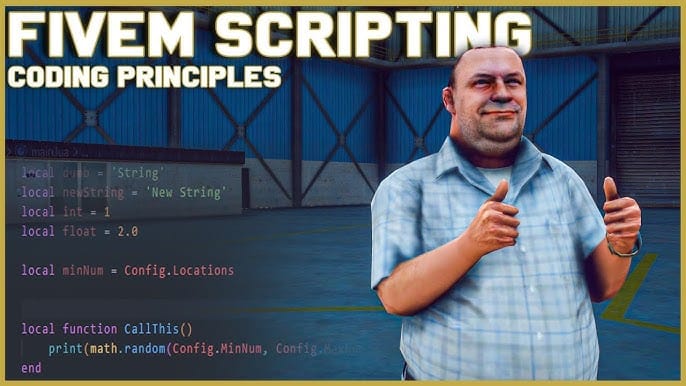
You don’t need to be a senior developer to script for FiveM. This guide shows you how to go from zero to building your first simple system using Quasar University, documentation and the same scripts that power real live servers

“I’m Not a Dev” – The Story Most FiveM Owners Tell Themselves
It usually goes like this:
- You buy or download a base server.
- You add a few scripts from different creators.
- Something breaks.
- The console fills with red errors.
And you think:
“I’m not a dev, I can’t fix this.”
You close the console. Maybe you even close the server.
But here’s the twist: most people who fix FiveM servers today once thought exactly the same.
You don’t have to become a senior engineer.
You just have to become a curious builder – and use the right tools to learn.
That’s where Quasar University and the wider Quasar ecosystem come in:
- 🎓 https://quasaruniversity.com
- 💬 https://discord.gg/quasaruniversity
- 🔗 https://www.quasar-store.com
- 📚 https://docs.quasar-store.com
Step 1 – Change Your Mindset: You Can Learn This

FiveM development is not magic. It’s a combination of:
- Simple programming concepts.
- Understanding how resources talk to each other.
- Practice, repetition and lots of trial and error.
The goal is not to write a 10,000-line phone system on day one.
Your goal is much more realistic:
- Understand logs instead of fearing them.
- Edit configs without breaking everything.
- Write small scripts that solve specific problems on your server.
Once you accept that learning is a journey, not an overnight download, everything gets easier.
Step 2 – Understand the Tech Stack (Without Freaking Out)
Let’s demystify the main pieces you’ll see:
- Lua – the most common language for FiveM resources (server + client).
- JavaScript/TypeScript – often used in NUI (UI) and some client/server logic.
- HTML/CSS – used to build the visual part of UIs (phones, menus, HUDs).
- SQL (MySQL/MariaDB) – used to store and load data like money, inventory, characters.
You don’t need to master everything today. Start like this:
- Learn basic Lua for FiveM.
- Understand how a script has server and client sides.
- Learn what a database query looks like.
- When you feel ready, explore NUI (HTML/CSS/JS) for custom UIs.
Quasar University is designed around that exact progression.
Step 3 – Use Real Docs as Your First Textbook
Instead of grabbing random tutorial playlists, start by reading documentation of scripts you actually use.
- 📚 Introduction to FiveM Development: Quasar University Docs
Inside, you’ll see:
- How a resource is structured (server, client, config, locales).
- Which dependencies it needs.
- Which exports and events are available.
- How to configure it safely.
Treat docs like chapters of a practical book.
Every time you understand a section, you unlock a new part of your server.
Step 4 – Follow a Guided Path with Quasar University
Docs teach you what a script does.
A structured course teaches you how to think as a developer.
That’s the gap Quasar University fills:
- 🎓 Website: https://quasaruniversity.com
- 💬 Discord: https://discord.gg/quasaruniversity
Inside Quasar University, you’ll find:
- Learning paths for FiveM beginners (from zero).
- Lessons on Lua, ESX/QBCore structure, events and callbacks.
- Practical exercises that build small but real features.
- Guidance on debugging, performance and best practices.
Instead of learning from 50 random videos, you follow a clear, step-by-step route designed for FiveM.
Step 5 – Build Your First Tiny Script (Not a Mega System)
Your first project shouldn’t be “a full police system”.
It should be something small you can finish in a day or two.
Example ideas:
- A
/mestyle command with custom text. - A
/helpcommand that sends basic info. - A small script that gives a welcome item to new players.
- A marker that opens a simple menu with a few options.
The educational loop is:
- You imagine a small feature.
- You write it (or adapt it) in Lua.
- You test it on a local or test server.
- You break it, fix it, and learn.
Every tiny script is a piece of XP for you as a developer.
Step 6 – Learn from Existing Quasar Scripts (Educated Reverse Engineering)
Once you’re comfortable with small scripts, it’s time to look at production-grade resources.
- 🔗 Quasar Store: https://www.quasar-store.com
Here’s how to use them as learning material:
- Install a script as usual following the docs.
- Then open its files in your editor.
- Look at how server.lua talks to client.lua.
- Study how configs are structured.
- Notice patterns: event names, callbacks, checks, logging.
You’re not copying – you’re reverse-engineering good habits.
Quasar scripts are built to scale on real servers, so they’re perfect for learning what “clean” looks like.
Step 7 – Use Community and Content as Fuel

Trying to learn FiveM development alone is possible – but much slower.
Use the community:
- 💬 Quasar Store Discord: https://discord.gg/quasarstore – see how other owners and devs solve problems you will definitely meet.
- 💬 Quasar University Discord: https://discord.gg/quasaruniversity – focused on students, improvement and feedback.
Use content as your visual classroom:
- 🎥 Search “Quasar Store Official” on YouTube for setup guides, trailers and breakdowns.
- 🔊 Use Quasar – Official Music on Spotify to give your coding sessions a familiar RP vibe and build your server’s brand across media.
Step 8 – Learn Also from the Official FiveM Side
To understand the “big picture” of where FiveM is going, always keep an eye on:
- 🌐 FiveM official site: https://fivem.net
- 💬 Cfx.re Forum: https://forum.cfx.re
Here you’ll find:
- Official announcements.
- Changes that might affect your scripts.
- Community examples and releases.
- Discussions on performance, security and best practices.
Combine that with:
- Quasar Docs → practical script knowledge.
- Quasar University → structured learning.
- Quasar Store → real-world code examples.
That’s a full education loop inside the same ecosystem.
FAQ – Learning FiveM Development with the Quasar Ecosystem
How long does it take to build my first script?
If you dedicate a bit of time each week, you can build simple scripts in just a few weeks. The goal is not speed; it’s consistency. Tiny projects, finished often, will grow your confidence.
Should I start with ESX or QBCore if I want to learn?
Pick the framework you plan to use on your server:
- If you want a huge amount of existing examples: ESX.
- If you like cleaner structure and a more modern approach: QBCore.
Quasar resources support both, and Quasar University can help you understand either.
Can Quasar University really help if I’m a total beginner?
Yes. Quasar University is built specifically for beginners and intermediate creators who want to understand FiveM, not just copy-paste. It starts from the basics and gradually takes you toward building your own systems.
Is reading other scripts’ code a good way to learn?
Absolutely – if you do it patiently and with curiosity. Reading Quasar scripts alongside their documentation is one of the best ways to see how professional FiveM code is structured.
What’s the end goal of learning FiveM development?
You don’t need to become a full-time developer. The real win is:
- Being able to fix common issues yourself.
- Creating or editing features your server needs.
- Understanding enough to choose better scripts and architectures.
In other words: you go from “I’m stuck” to “I can figure this out” – and that changes everything for your FiveM project.